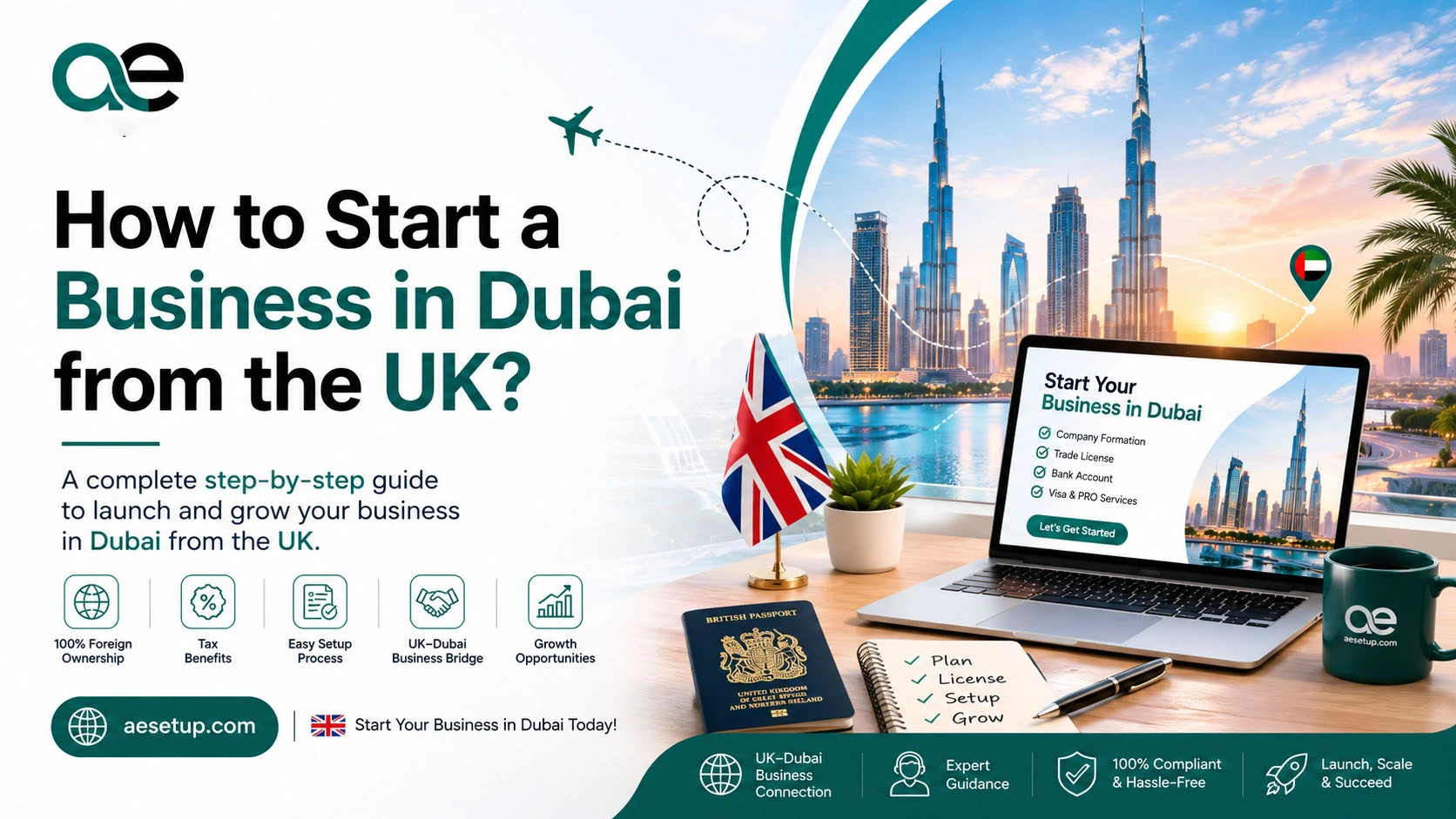
Over the past few years, more UK entrepreneurs have been looking beyond local markets, and Dubai has quickly become one of the top choices. Especially after Brexit, businesses in the UK have been exploring new ways to stay globally competitive, and Dubai offers exactly that: easier international access, investor-friendly policies, and a tax system that actually works in your favour.
Dubai has quietly become one of the most popular destinations for UK entrepreneurs looking to expand or relocate their businesses. And the numbers back it up – in 2024 alone, 2,588 UK companies joined the Dubai Chamber of Commerce, up 14% from the year before. That kind of growth doesn’t happen without good reason.
But how do you actually set up a business there while sitting in the UK? Is it complicated, expensive, or time-consuming? In this guide, we’ll break it all down for you – simple, practical, and updated for 2026.
Can a UK Citizen Start a Business in Dubai?
Yes, absolutely. The UAE government actively encourages foreign investment and allows full ownership in many industries. There are no major legal restrictions for UK nationals, and English being widely spoken in Dubai makes the entire process considerably smoother. You will, however, need to make a few key decisions before you begin – particularly around your business structure and jurisdiction.
Why Dubai Makes Sense for UK Entrepreneurs?
Before diving into the process, it’s worth understanding what makes Dubai such a compelling choice.
1. Tax Efficiency That Actually Impacts Profit
One of the biggest draws is the tax structure. Dubai offers 0% personal income tax, and while corporate tax has been introduced (9%), it’s still significantly lower than in the UK. For many founders, this directly improves cash flow and profitability, especially in the early stages of business.
2. Post-Brexit Expansion Opportunities
Since Brexit, many UK businesses have faced trade limitations and added complexities in Europe. Dubai offers a strategic alternative, helping businesses maintain international reach without being restricted by EU regulations.
3. 100% Foreign Ownership
Unlike before, UK entrepreneurs can now fully own their businesses in many sectors, especially in Free Zones and many Mainland activities. This means complete control over operations, profits, and decision-making without needing a local partner.
4. A Massive British Expat Ecosystem
With over 120,000 British nationals already living in the UAE, the networking opportunities are unparalleled. From British Business Groups to UK-curriculum schools, the ecosystem is built to support the British lifestyle and business etiquette.
5. Strong Investment Climate
In 2023, the UAE pulled in nearly $30.7 billion in FDI, up 35% from the year before – a sign of international confidence in Dubai’s long-term stability. And UK–UAE trade climbed to £23.8 billion in recent figures, with services alone jumping over 15% to £7.3 billion.
6. Fast & Streamlined Business Setup
Compared to the UK (where processes can sometimes drag), Dubai is known for its speed and efficiency. In many cases, you can set up a company within a few days, especially with the help of business consultants.
Steps to Start a Business in Dubai from the UK
You don’t need to be physically in Dubai to start your business there and the process is much more straightforward than most UK entrepreneurs assume.
Step 1: Choose Your Jurisdiction – Mainland or Free Zone
This is the single most important decision you’ll make when setting up a business in Dubai from the UK, and it shapes everything that follows.
Dubai Mainland is ideal if you want to trade directly with the local UAE market, bid for government contracts, or operate without geographic restrictions. Mainland companies are licensed by Dubai’s Department of Economy and Tourism (DET) and allow businesses to operate across the UAE market without restrictions. They are generally better for businesses targeting the local consumer market or clients within the UAE.
Free Zones are the preferred route for many international entrepreneurs, and for good reason. Dubai’s free zones offer tax-free benefits, 100% foreign ownership, and full repatriation of profits. However, free zone companies are restricted to operating within the free zone or engaging in international business rather than serving the local market directly.
There are over 40 free zones in Dubai and the wider UAE, each catering to specific industries. Popular ones for UK entrepreneurs include DMCC (commodities and trade), Dubai Silicon Oasis (technology), IFZA, and SHAMS. IFZA and SHAMS typically offer the lowest entry costs, starting around AED 12,500.
Which should you choose? If you’re a consultant, freelancer, or running an internationally focused business, a free zone will likely be the simpler and more affordable option. If you’re targeting local UAE clients or want to set up a physical retail or service operation, mainland is the better fit.
Step 2: Decide on Your Business Activity and Legal Structure
Once you’ve chosen your jurisdiction, you need to define exactly what your business will do. The UAE government recognises thousands of specific business activities, so being precise here matters, it directly affects the type of licence you’ll need.
The main licence types include: a commercial licence for businesses involved in trading goods; a professional licence for service-oriented businesses including consultants, marketing agencies, and legal services; and an industrial licence for manufacturing or production-based businesses.
In terms of legal structure, most UK entrepreneurs setting up in Dubai opt for either a Free Zone Establishment (FZE), a single-shareholder company or a Free Zone Company (FZ-LLC) for multiple shareholders. On the mainland, the Limited Liability Company (LLC) is the most common structure.
Step 3: Register a Business in Dubai
Here’s how the actual registration process works when you’re setting up a business in Dubai from the UK:
- Reserve a trade name: The trade name must be unique, must not be similar to any other registered company, and must include an abbreviation of your legal structure (such as LLC or FZ-LLC). It must not contain inappropriate language or names of government bodies.
- Apply for initial approval: An initial approval is the UAE government’s ‘no objection’ towards a particular business being established. It allows you to proceed with the next steps but does not grant permission to operate yet.
- Prepare your documents: You’ll typically need your passport copies, a business plan, a Memorandum of Association (MOA) if applicable, and proof of your business address. Documents may need to be attested or notarised depending on the free zone or authority involved.
- Secure office space: All businesses in the UAE must have a physical address to operate from. In Dubai, the tenancy contract has to be registered through the Dubai Land Department’s Ejari portal. Free zones often offer flexi-desks or shared workspaces as a more cost-effective alternative to a full private office.
- Obtain your trade licence: Once all approvals are in place and your office address is registered, your business licence is issued. This is what legally allows you to operate.
- Apply for your residence visa: You’ll need a residence visa tied to your business if you plan to live and work in Dubai or hire employees legally. Most free zones bundle this into their setup packages. You’ll also need to complete a medical test and obtain an Emirates ID.
- Open a corporate bank account: This is often the step people underestimate. UAE banks have fairly rigorous KYC (Know Your Customer) requirements, and approval can take a few weeks. Having your business licence, tenancy contract, and company documents ready from the start speeds things up considerably. Choosing a well-regarded free zone like DMCC can also strengthen your application.
The setup process is fully online for many free zones and can be completed remotely in about 2–3 weeks, meaning you don’t necessarily need to travel to Dubai to get started.
Step 4: Understand the Business Setup Costs Involved
This is where many people get caught off guard, not because the costs are high, but because they’re not always clearly laid out upfront.
Overall, the total investment for a free zone company setup typically falls between AED 18,000 and AED 34,000. Compared to mainland formation, where first-year expenses often exceed AED 30,000 to AED 40,000, free zones remain one of the most practical options for a lower-cost entry.
Here’s a rough breakdown of what you’re paying for:
- Trade licence fee: Free zone licences can start as low as AED 6,000, while mainland licence fees generally start around AED 12,000 to AED 15,000, depending on activity.
- Office space: A flexi-desk in a premium free zone starts from approximately AED 15,000 per year, while private offices range from AED 25,000 to AED 100,000+ depending on size and location.
- Visa costs: These cover medical tests, Emirates ID, and residence stamp fees. Most setup packages offer one or two investor visas as part of the bundle.
- Registration and government fees: These include trade name reservation, initial approval fees, and any regulatory approvals required for your specific activity.
There may also be costs for document attestation, business plan preparation, and professional services if you’re working with a consultant, which, for most first-time setups, is well worth the investment.
Documents You’ll Need as a UK National
The documentation required when you register a business in Dubai from the UK is relatively straightforward:
- Valid UK passport (with at least 6 months validity)
- Passport-size photographs
- Proof of residential address (UK utility bill or bank statement)
- Business plan (required by most free zones and mainland authorities)
- Memorandum of Association (for LLCs or multi-shareholder structures)
- Bank reference letter (some authorities require this)
All documents in English are generally accepted, though some may require official translation into Arabic for mainland submissions.
Popular UAE Free Zones for UK Entrepreneurs
If you’re leaning toward the free zone route, which most UK entrepreneurs starting out in Dubai tend to do, here are some of the most commonly chosen options:
- DMCC (Dubai Multi Commodities Centre): Ideal for trade, commodities, and professional services. Highly regarded by banks, which helps with corporate account opening.
- IFZA (International Free Zone Authority): One of the most cost-effective options, popular with consultants and SMEs.
- Dubai Silicon Oasis: Suited to tech and digital businesses.
- SHAMS (Sharjah Media City): Very affordable, good for media, content, and creative industries, and close enough to Dubai to be practical.
- JAFZA (Jebel Ali Free Zone): Best for logistics, trading, and companies needing warehouse or industrial space.
Essential Tips for a Smoother Business Setup Process
A few practical things that make the process easier when setting up a business in Dubai from the UK:
- Work with a registered business setup consultant: The process has many moving parts, and a good consultant ensures you pick the right jurisdiction, licence, and structure from the start – saving you time and money in the long run.
- Get your bank account sorted early: The corporate banking process in the UAE takes longer than most people expect. Start gathering your documents as soon as your licence is issued.
- Don’t underestimate visa timelines: Residence visas involve medical tests and Emirates ID registration, which can take a few additional weeks. Plan accordingly, especially if you’re relocating.
- Keep renewal dates in mind: Your trade licence needs annual renewal. Missing the renewal window can result in fines, so build this into your business calendar from day one.
This Could Be Your Best Business Move Yet
Honestly, most UK entrepreneurs overestimate how complicated this is. Yes, it’s a different market, but Dubai has made it incredibly accessible for foreign investors. With the right approach (and a bit of guidance), you can go from idea to a fully licensed business much faster than you’d expect.
With AE Setup, you get expert guidance at every stage- from planning and registration to licensing and beyond. So if you’re thinking about taking that next step, you don’t have to figure everything out yourself; you just need the right people to guide you through it. So, get in touch today.
Frequently Asked Questions
1. Can a UK citizen start a business in Dubai without visiting in person?
Yes. Many free zones offer fully digital setup processes, meaning you can register your company, sign documents remotely, and receive your licence without travelling to Dubai. You will, however, need to visit at some point to complete your residence visa medical tests and Emirates ID registration.
2. How long does it take to set up a business in Dubai from the UK?
The process typically takes 2 to 4 weeks for a free zone company once all documents are in order. Mainland setups can take slightly longer depending on the activity and any additional approvals required.
3. What is the minimum cost to start a business in Dubai from the UK?
A free zone setup can start from as low as AED 18,000 to AED 34,000 for the first year, covering your licence, office space, and one investor visa. Mainland setups generally start from AED 30,000 to AED 40,000. Costs vary based on your chosen jurisdiction, activity, and office type.
4. Do I need to pay UK tax if I run a business in Dubai?
This depends on your personal tax residency status. If you remain a UK tax resident, HMRC may still have a claim on your income. It’s strongly recommended to consult a UK tax adviser before relocating or restructuring, as the rules around UK domicile and residency are complex.
5. Can I open a UAE corporate bank account as a UK national?
Yes, but it takes time. UAE banks have strict KYC requirements and the approval process can take anywhere from two to six weeks.